As I’m writing this it is 65 degrees on Christmas Eve and hard to believe it’s winter. But it is, and for many photographers, their season is over. It’s too cold, too wet or snowy, trees don’t look good bare, or name you own reason, we just don’t get out and shoot as much.
Imagine if Tom Brady did nothing after the Super bowl. For 6 months he doesn’t run or lift weights; he doesn’t study game films, he doesn’t touch or deflate a football, and then he shows up cold for the first preseason game. How do you think he’d do? I certainly don’t think he’d look like the quarterback we’re used to.
Why should we expect our photography skills to be any different? Photography is a frangible skill like many others; use it or lose it. So here are some ideas to train yourself during this “off season”. Also to be a bit clearer, training isn’t the same as shooting the same things in the same way over and over and expecting to get better. It’s working on specific skills that will make you a better photographer.
Probably the most important skill is to master your camera. Grab your camera and a lens, and get out the manual and practice some basic settings until you can change them without fumbling. Also download your camera’s manual and put it on your phone for reference in the field. The idea is to be able to quickly change your settings without having to think about it, so you can react quickly to changing subjects, changing light, changes in motion.
1. Learn how to change between aperture priority, shutter priority, and manual modes and understand what each mode actually does, Practice until you can change modes without taking the camera from your eye. In aperture priority be able to change aperture or in shutter priority be able to change shutter speed without lowering the camera. In all modes, be able to change ISO quickly, preferably while looking through the camera.
2. Learn your camera’s metering patterns, how they affect exposure, and how to change them.
3. Learn your camera’s focusing modes, how to change them, and how to select and move focus points around to precisely choose your focus point.
4. Learn how to dial in exposure compensation to increase or decrease exposure, and why and when this is necessary. Again learn to do this while looking through the viewfinder.
5. Learn how to turn exposure bracketing on and off and how to set the number of brackets and the exposure increments.
6. Practice changing lenses smoothly.
7. Practice holding your camera steady, and shoot a test pattern at different shutter speeds to see what speeds you can hand hold effectively. If you shoot moving subjects like horses, race cars or planes, practice panning.
8. Practice setting up your tripod (You do own one don’t you?), mounting your camera and adjusting it.
9. If you use off camera speedlites, practice using the on camera controller to change modes (manual, ETTL, High Speed synch) and how to change the power of each speedlite independently. Make sure all of your groups, channels and IDs are all set correctly, controller set to master, speedlites to slave and correct synch method and that each light fires.
Take the time to really clean your cameras, lenses, and filters. If you feel comfortable and have the supplies check your sensor for dust and clean it if necessary. Clean the front and rear elements of your lenses, and clean any filters that you use. Then when you do go out, everything will be ready to shoot.
Now that the year is ending, spend some time in Lightroom, Bridge or Capture One or wherever you organize your images. This is a good time to review the images you shot this year. Look at your good images, and see why they are good; is it great composition, great light, good post processing, just the right subject, or all of the above. Maybe more importantly, look at your failures, and try to figure out what went wrong and how to not make the same mistake in the future. Play with some images and see if you can improve them through different cropping or processing. Try taking an image you like and processing it multiple ways. Try some different presets. If you’ve been shooting for a few years, go back a couple years and look for images to reprocess. Between the changes in some of the programs like Lightroom and Photoshop, changes in your editing skills, and most importantly, changes in your taste and style, you may find images that were just OK when you first worked on them, but now have the potential to be good or great images with different processing.
Set a goal to learn at least one new editing skill in Lightroom or Photoshop every week. After three months of winter, you’ll have 12 new skills. Think how much and how fast you’ll progress if you commit to learning two or three skills per week?
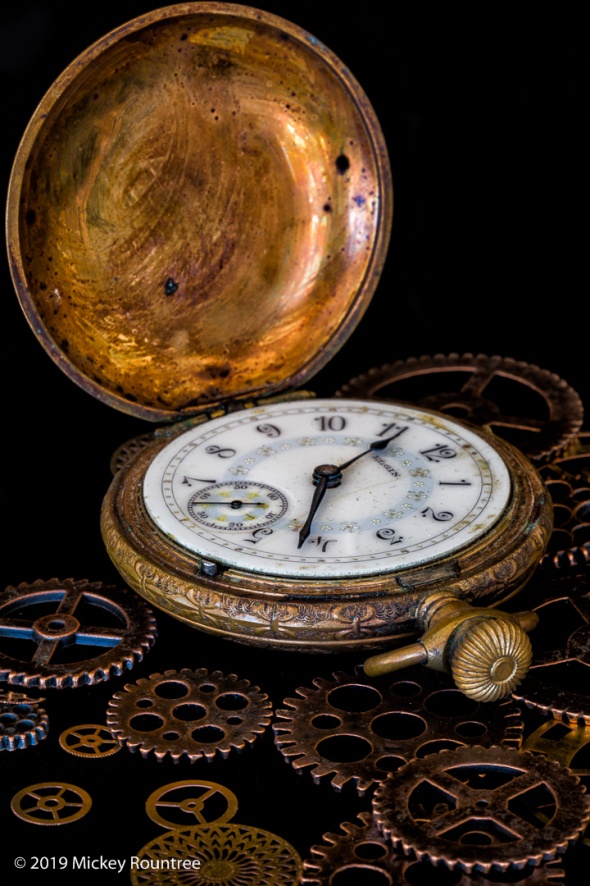
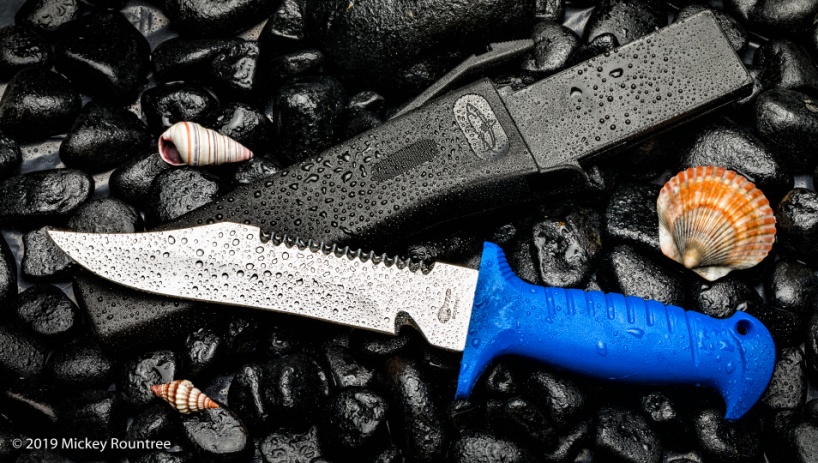
Try shooting some still lifes, or “flat lay” photography (Shooting down on subject laying flat on a surface). Lighting can be as simple as window light, or take the opportunity to learn lighting with continuous lights or off camera speedlites, or studio strobe. Try light-painting with some small flashlights. Go to a florist or grocery store and get some flowers to photograph indoors. Search Ebay for small items like gears, keys, old watches, beads, fishing lure and flies, feathers, old tools, artificial fruits and foods. You can photograph colorful candies like M&M’s and the best part is you get to eat the props after the shoot.
One of my favorite still life photographers on 500 PX is Galina (https://500px.com/ustinagreen) from Uzbekistan. More on 500 PX later.
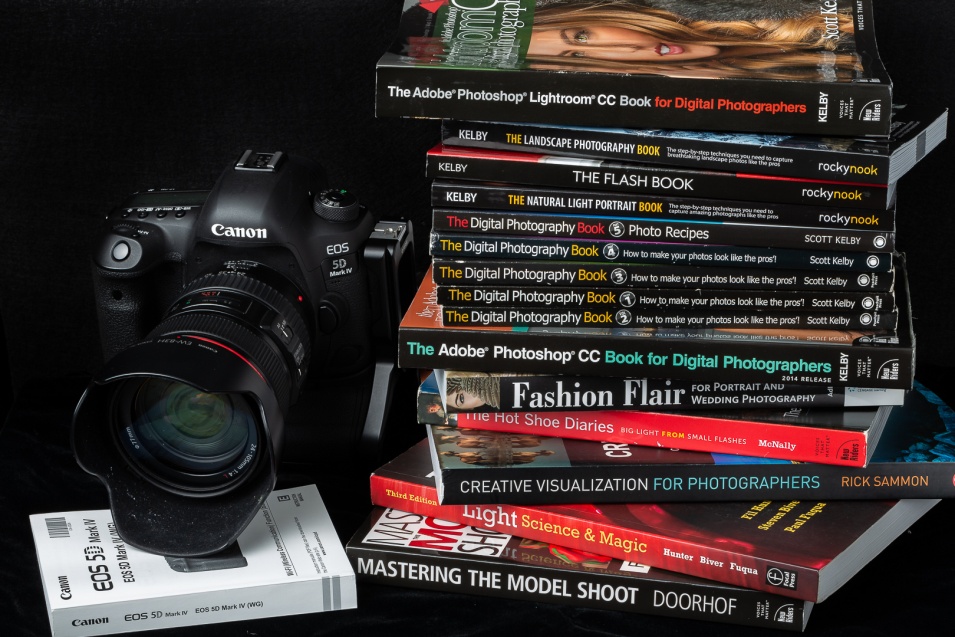
Read one or more photography books on a subject that interests you. Some of my favorite authors are Scott Kelby, Rick Sammon, Lindsay Adler, and Joe McNalley. At least 90% of my Photoshop and Lightroom skills have come from Kelby’s books.
Watch some videos. I’m a member of Kelby One and have learned a lot from the video courses there, or you can search on YouTube for photography skills you want to learn or improve on. One of the best photoshop instructors is Unmesh Dinda and he has his own YouTube Channel. (https://www.youtube.com/channel/UCMrvLMUITAImCHMOhX88PYQ)
If you have the opportunity, go to a workshop or seminar, although there seem to be fewer in winter. Imaging USA is the PPA’s (Professional Photographers of America) national convention, and it’s in Nashville Jan 19-21, 2020. There are free passes available for the exhibition hall where you can see new products, and meet representaives from all of the major print labs and manufacturers. Imaging USA will probably be in Atlanta in January, 2021.
Spend some time on Instagram and 500PX and see what others are doing and what inspires you.
Research and plan a photography trip. This could be anything from a local outing to an African Safari or a multi city or country trip to Europe, or out to the American South west. Look at locations, images others have shot, the time of year, time of day, weather conditions, and think what you’ll need and when to go. You go to Google and search for “best places to photograph in (City or Country, or Park)” and you’ll see lots of images and sometimes even very detailed directions for how to get to the good locations and best time to shoot.
Download the app “Photopills” for your IPhone or Android. This has just about every tool a photographer could need, but it is particularly useful for figuring out the position of the sun, moon or even the Milky Way on any date and time. They have a PDF manual for download and several videos on YouTube, and there is even a video course on Photopills on Kelby One.
Please note that in all of this, I didn’t say go out and buy new gear. As much as I love gear, it is far better (and cheaper) to master the gear you own, rather than expect new gear to make you a better photographer. If you’re like me, you’re probably holding your gear back much more than it holds you back.
If you are serious about your photography, be serious about your training and practice. It would be good if three months from now, when everything is warm and pretty, you can go out and shoot without having lost any of your photography skills. It would be great if three months from now you can go out with new and even better skills.