I recently had the opportunity to photograph a ballet dancer, and decided to use the shoots to experiment with both a speedlite on location and some of the new MagMod accessories. I was also using the Yongnuo 600 RT II and YN E3-RT transmitter for the first time. The main differences from the Yongnuo 560 system that I wrote about earlier are the ability to shoot in ETTL mode, and to use high speed synch (HSS) which allows the use of shutter speeds up to the camera’s fastest shutter speed. For my two location shoots I wound not using ETTL mode, or needing HSS, so anything I describe here could have been done just as well with the cheaper YN 560 system.
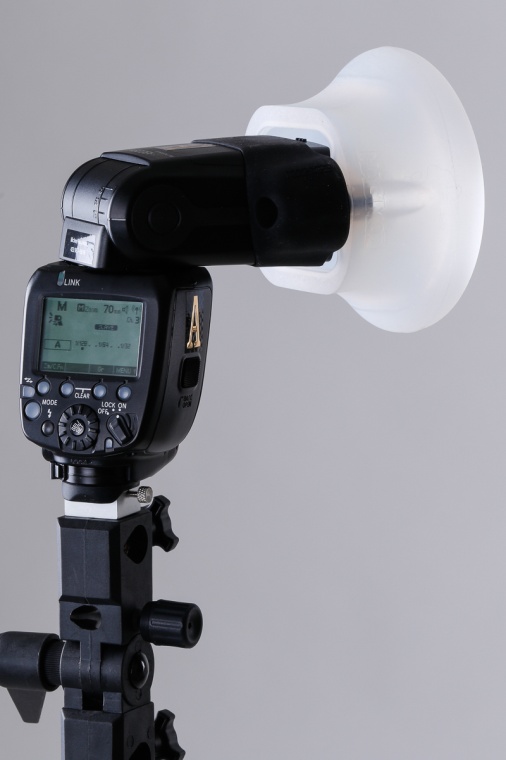
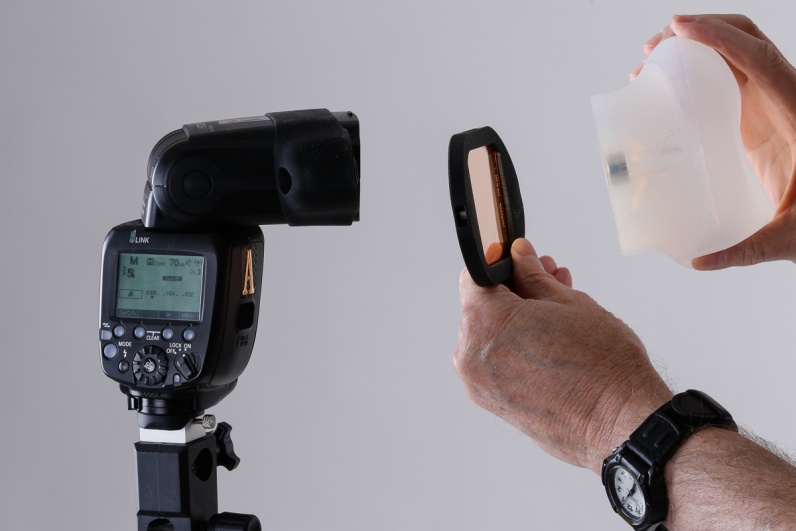
The MagMod is a modular system, consisting of a MagGrip band that stretches over the speedlite. It contains two powerful magnets which will attach to corresponding magnets on all of the accessories. The MagMod accessories I used were the MagSphere and the Mag Gel. The Magsphere is a round silicone rubber diffuser, that was originally designed to use when shooting bounce flash in small to medium sized rooms. However it works well as a diffuser when aimed directly at the subject. I chose it over an umbrella because I had more control over the spread of the light beam and also because it does not have the wind resistance of an umbrella. On my first shoot this was important because I was shooting on a pier at the lake with a breeze blowing. The Mag Gel is used to hold colored gels for color temperature balancing or for dramatic color. It can be used in conjunction with the MagSphere and other modifiers. You can find out more about the MagMod system at their website: http://magnetmod.com .
Figure The MagSphere
Figure 2 The MagSphere used with a Mag Gel
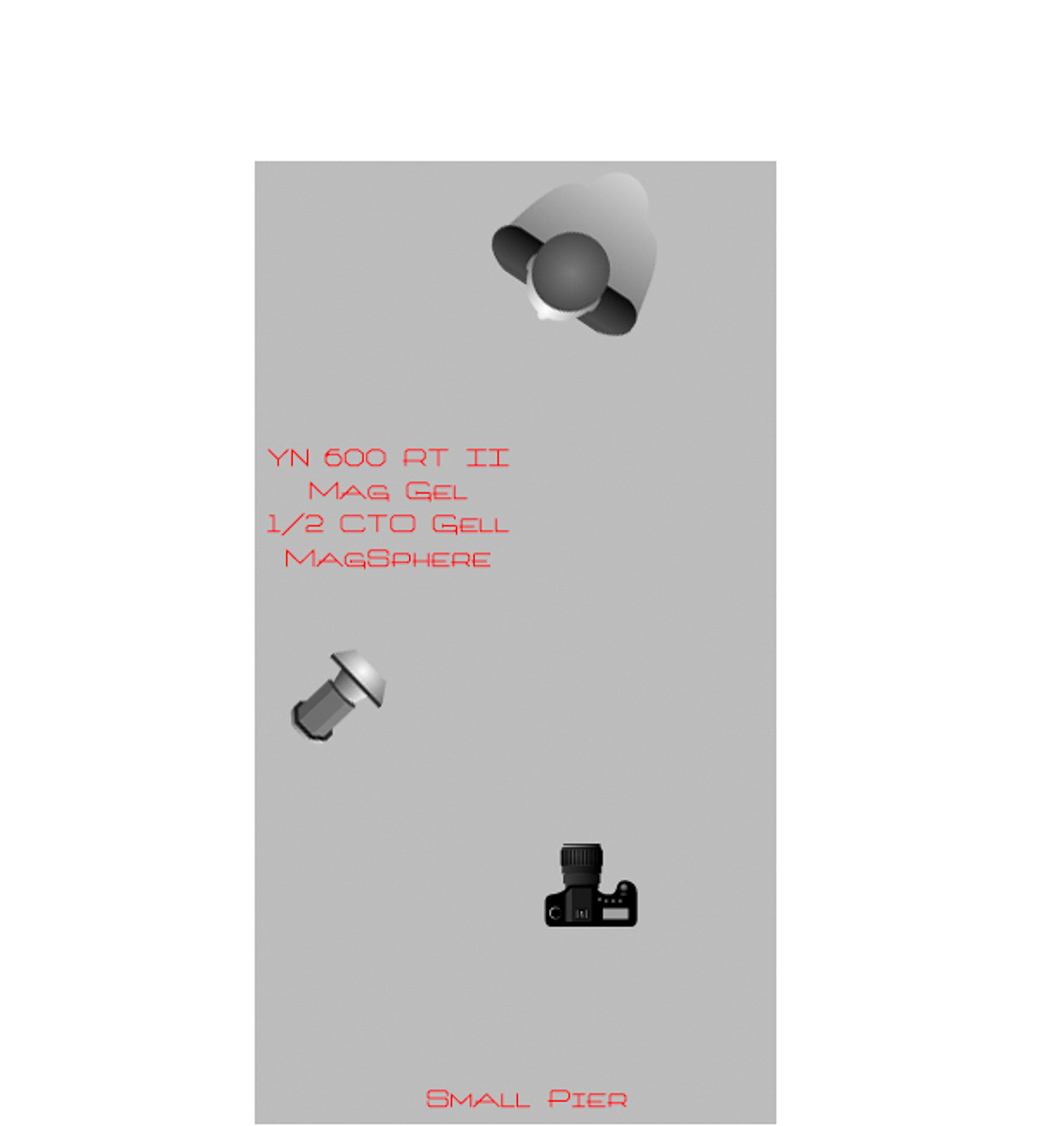
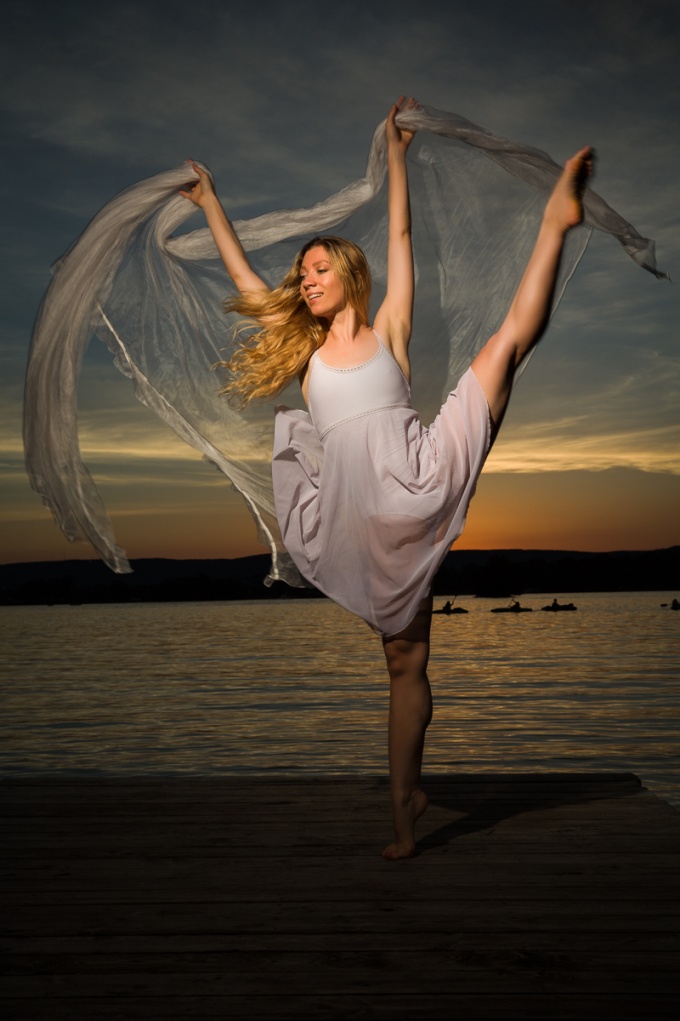
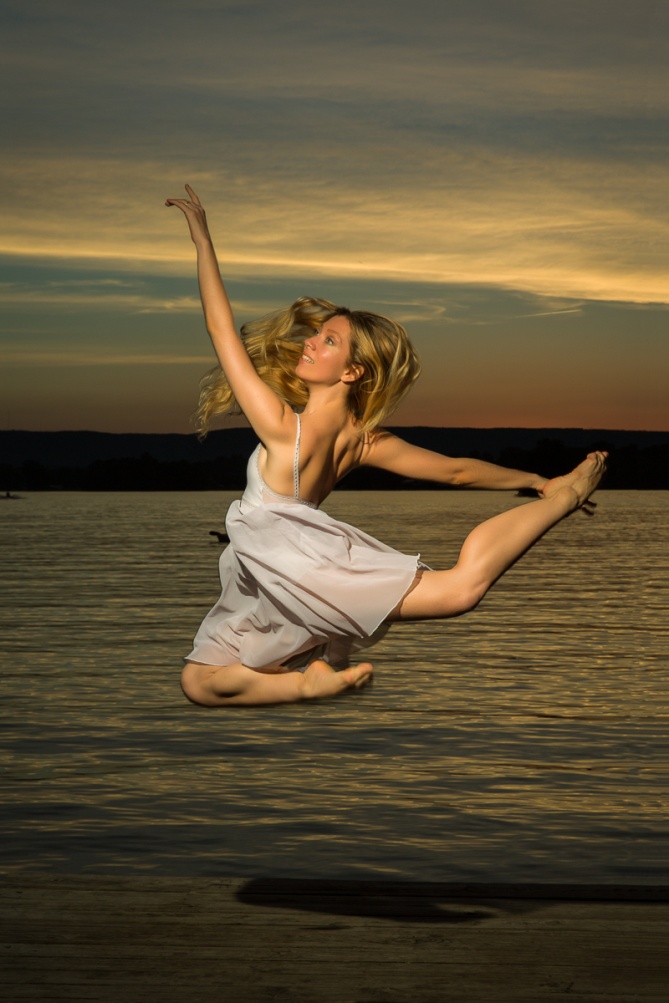
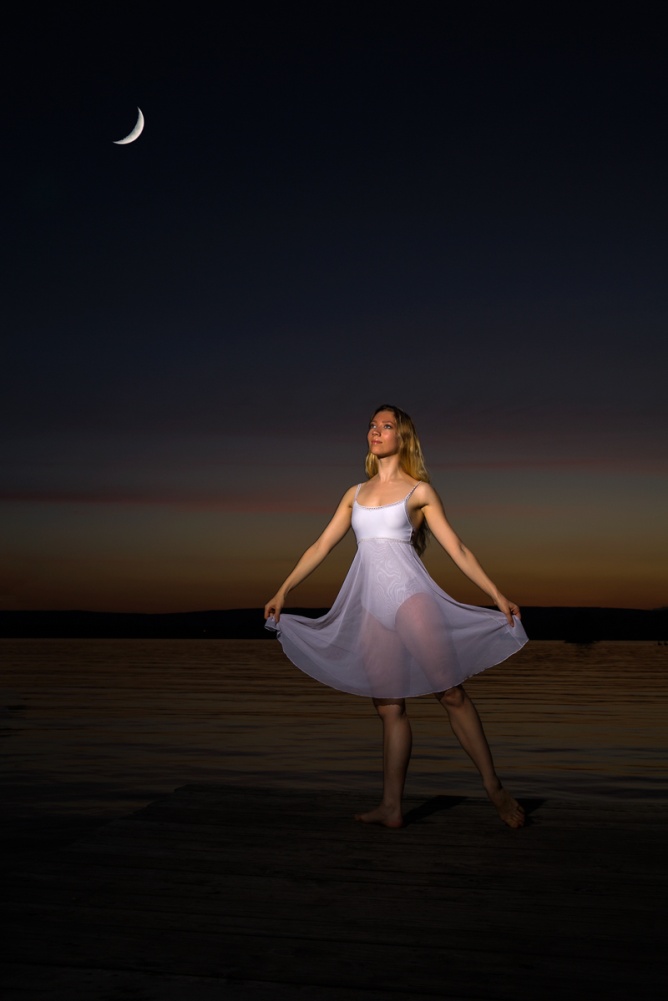
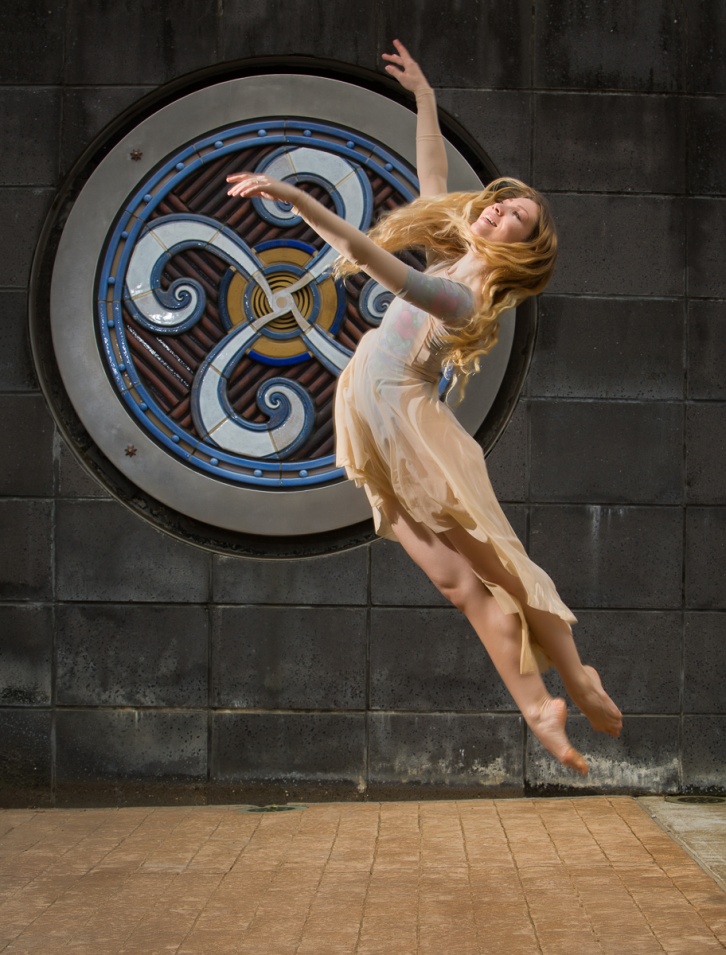
On the first evening we went to Chester Frost Park in Hixson, just as the sun set. I didn’t have an assistant, so I used a light stand. I used the MagSphere and a ½ CTO gel in the Mag Gel. This gel warmed the light up to match the color of the flash to the color and mood of the sunset. When using speedlite outdoors, the power of the flash controls the aperture, while the ambient light is controlled by the shutter speed. My general setting is to choose manual mode, an aperture of f/8 or f/11 and then select a shutter speed that underexposes the ambient by 1 or 2 stops to make the colors richer and more saturated and to help separate the model who is lit by the strobe. I then adjust the power of the speedlite until the model is properly exposed. As long as the distance between the model and speedlite is constant, I don’t need to adjust the aperture or power again. As the ambient light decreases, I do need to use slower shutter speeds to maintain the balance of light. Right after sunset I was using a shutter speed of 1/200 sec and by the time it was too dim to focus I was down to 1/30 sec.
You will notice a couple of interesting effects of mixing flash and dim ambient. Even though I’m at a slow shutter speed, the speed of the flash is fast enough to stop ALMOST all movement. You will see a shadow behind the model which is caused by her movement blocking out the ambient light. There is no way she was casting a shadow on the sky miles away. But it does create an interesting effect and almost makes it appear she was in front of a painted background. Also you will notice that most of the model is sharp, but her feet still tend to blur a bit because they are moving faster than her body.
Figure Speedlite and MagSphere and 1/2 CTO
Figure 4 1/200 f/8 ISO 100
Figure 5 1/100 f/11 ISO 100
Figure 6 1/40 F/8 ISO 100
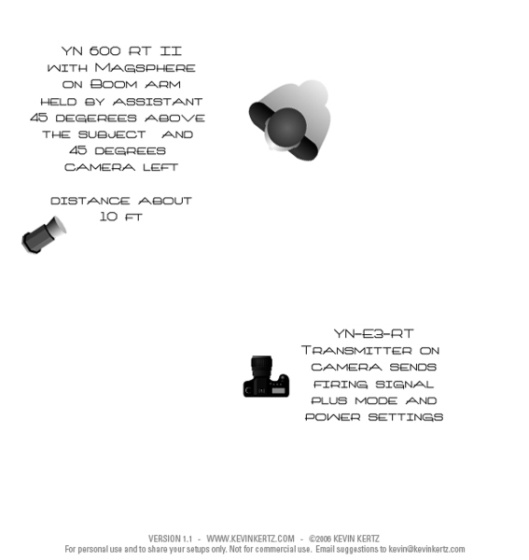
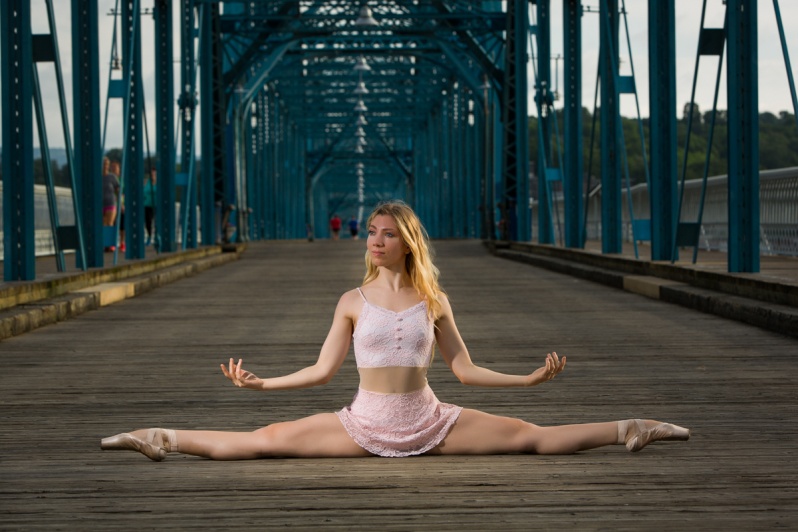
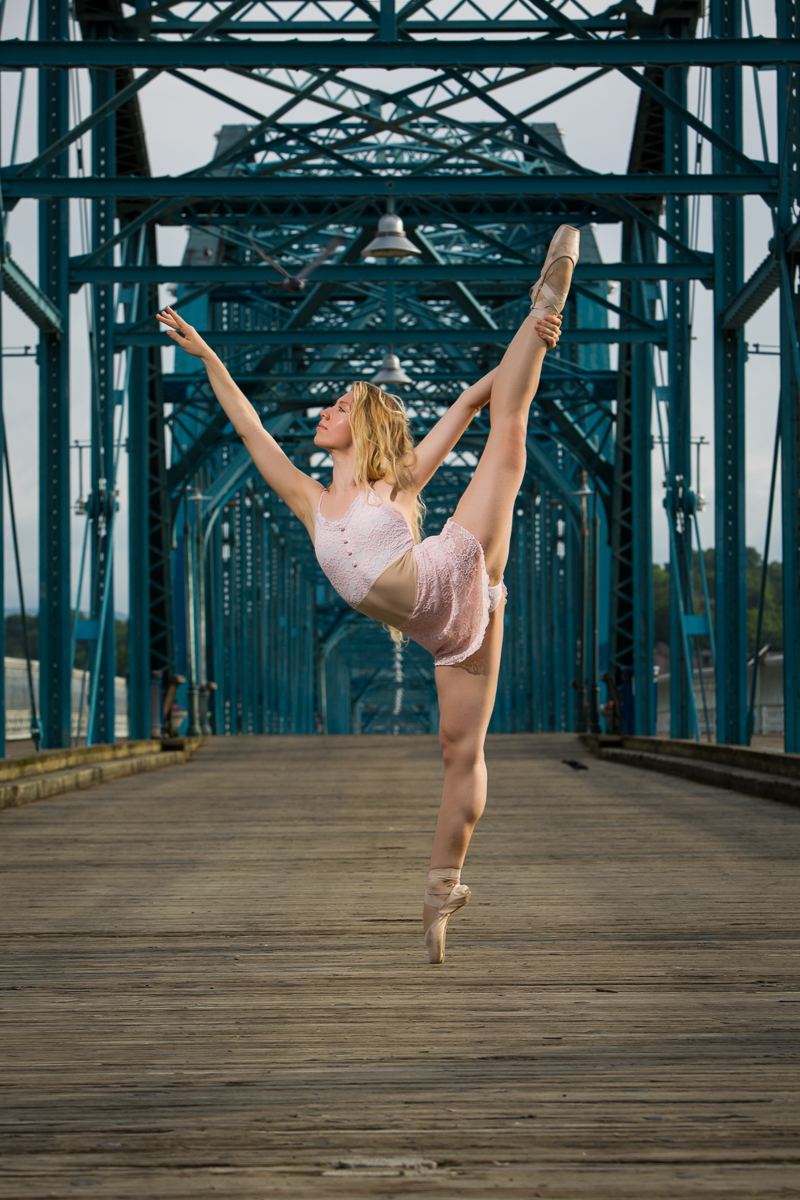
On Monday morning I had Tom Angsten join us downtown and we shot on the Walnut Street bridge and around the aquarium. Rather than having to use a lightstand and constantly adjust it Tom acted as a voice activated Lightstand (VAL). This allowed us to shoot much more efficiently, which was important in the rapidly changing light. We shot in everything from bright direct sunlight after sunrise, to open shade to shade plus heavy overcast. Usually the light was about 45 degrees camera left and 45 degrees above the model. There was one shot where the natural sunlight was nice, and I used the speedlite and MagSphere as an on camera fill, at about 1 stop less than the ambient.
Mixing flash and ambient daylight, and most importantly, getting the flash off camera opens up a huge range of possibilities. All it takes is a speedlite with adjustable power, and a transmitter to trigger it from the camera. So grab your speedlite and go outside and play.