In this article I’ll be talking about lenses and how they affect the look of your photos. Most DSLR’s are sold with a zoom lens, and the first accessory many photographers buy is an additional lens, so it is important to understand what different lenses can do.
Basic definitions
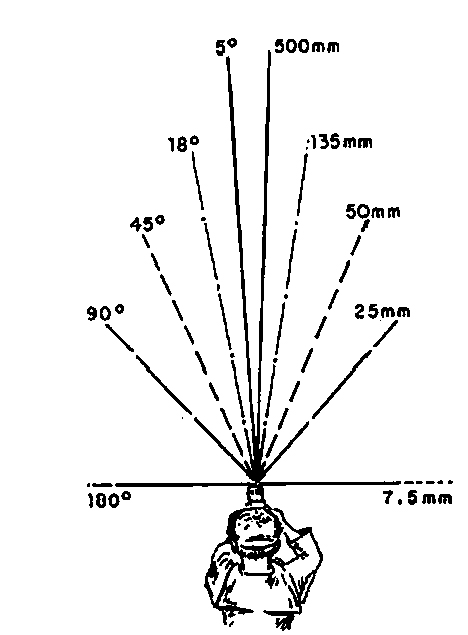
Focal length is the distance in millimeters (mm) from a lens to the point where light rays passing through it converge. With modern lens designs with multiple elements, this definition gets somewhat blurred (bad pun totally unintended.) A better working definition for photographers is based on what the various focal lengths do optically. The longer the focal length is, the narrower the angle of view, and the more objects appear to be magnified. The shorter the focal length, the wider the angle of view and the lower the magnification.
Effective focal length depends on the crop factor of the camera which is a function of sensor size. The effective focal length of a lens is its focal length times the crop factor. So a 100mm lens on a full frame camera (crop factor is 1) would have an effective focal length of 150mm on a Nikon crop body (crop factor 1.5), 160mm on a Canon crop body (crop factor 1.6), and 200mm on a micro 4/3 camera (crop factor 2). For the rest of this article, I will discuss focal length as it relates to a full frame camera. You can do the math to see how a lens of a given focal length would look on your particular camera.
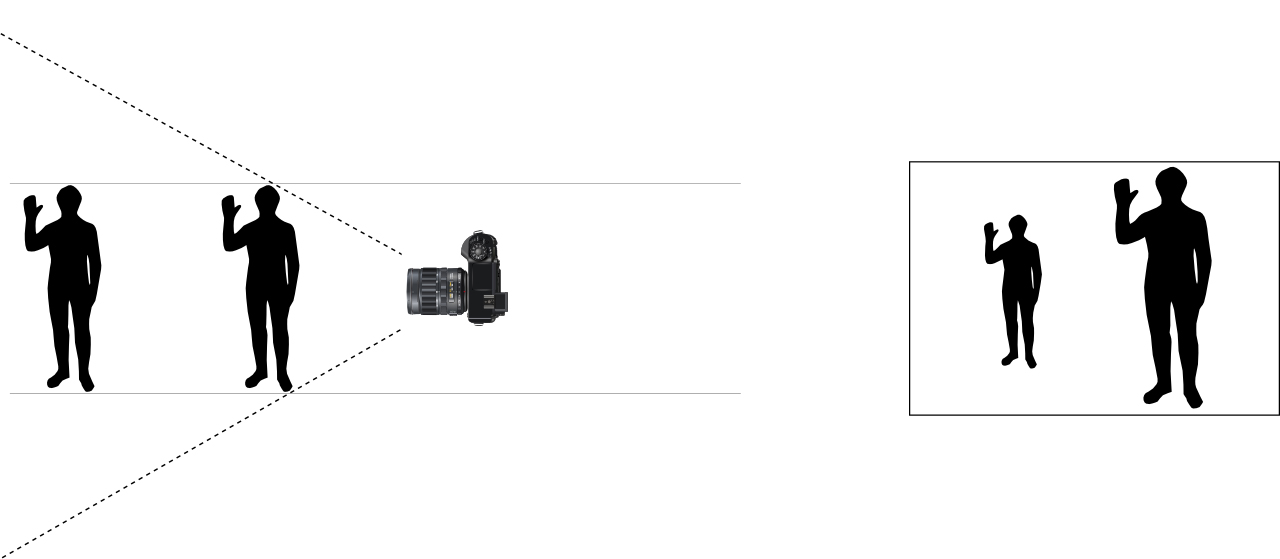
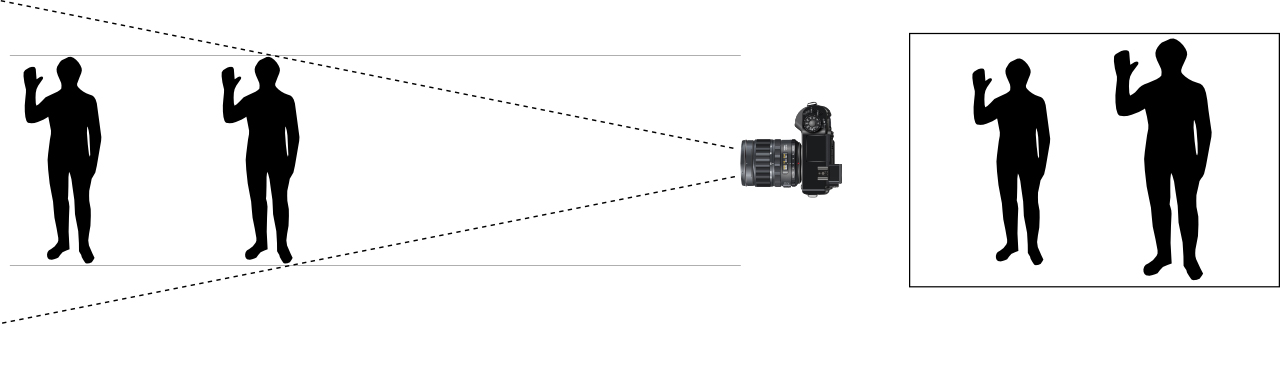
Perspective is the feeling of distance between near and far subjects. You can also think of it as the relation between the apparent size of near and far objects. Perspective is purely a function of the camera’s distance from a subject. If you take a picture from the same position at different focal lengths, the size of the main subject will change, but if you enlarge or reduce the images so that the main subject is the same size, you will see that the relationship of objects in the picture does not change. On the other hand, as you change focal length and move closer to or farther from your subject to keep the subject size the same, perspective varies greatly. Shorter focal length lenses (wide angle) exaggerate the distance between objects and the increase relative size differences. Longer focal length lenses (telephoto) compress the distance between objects and decrease relative size differences. When you hear someone talk about the “wide angle perspective” remember that it is not due to the lens so much as it is that the wide angle of view allows the camera to be close to the subject and that makes the subject appear large in relation to more distant objects. When you hear “telephoto perspective” it is not the lens’ focal length so much as it is that the lens allows the camera to be farther away from the main subject, and background objects will appear large in relation to the main subject. To summarize, you change perspective with your feet, you change the look of a photo with lens selection.
Figure 1 Short focal length lenses have a wide angle of view. When the camera is close enough to the front subject to make him appear large, the background subject appears much smaller.
Figure 2 Longer focal length lenses have a narrow angle of view. With a longer lens, the camera has to be moved back to keep the front figure the same size. However, now the background subject does not appear to be as small or distant as with the wide angle shot
Prime lenses are lenses with a single focal length. They are usually faster ( larger aperture) zoom lenses. They may also be slightly sharper than a zoom lens, but with good quality lenses, this difference isn’t as great as it once was.
Zoom lenses are adjustable to cover a range of focal lengths. So for example a 24-105mm lens can cover every focal length between 24mm and 105mm. They can be much more convenient and lighter than carrying several prime lenses and having to constantly change lenses.
Lens markings give basic information about the lens. There is the focal length, either a single number for a prime (i.e. 50mm) or the range of a zoom (i.e. 70-200mm). The aperture is given as a single number for lenses with a constant aperture (i.e. f/2.8) or as a range for zoom lenses that do not have a constant aperture (i.e. f/3.5-5.6). In this case the aperture becomes smaller as the lens is zoomed from the shorter focal length to the longest. The diameter (i.e. 77mm) of the lens is included to indicate what size filters and accessories screw onto the lens.
Types of Lenses
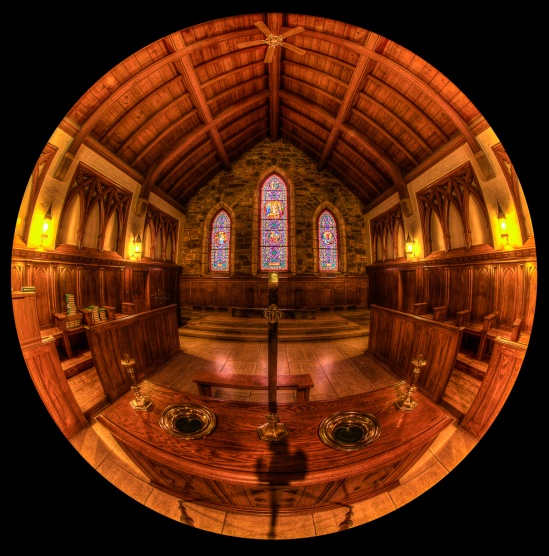
Fisheye Lenses have an angle of view of 180o. They range from 8mm to 15mm, and create considerable curvature and distortion. At 8mm, they do not cover the entire sensor and create a circular image. At 15mm they cover the entire sensor area and fill the frame, but still cover a 180o angle of view and still create distortion. With a 180o angle of view it is possible to get the tripod feet or your feet in the picture. Make sure you wear matching shoes and socks.
Figure 3 A 8-15mm fisheye lens at 8mm does not cover the whole sensor and creates a circular image.
Figure 4 A 8-15mm fisheye lens at 15mm covers the whole sensor and creates a full frame image. Notice the extreme curvature of lines typical of fisheye lenses in both shots.
Ultrawide Angle Lenses have focal lengths of less than 24mm. Lenses of very short focal length (less than 15mm) may cover a very wide angle of view without being a fisheye lens. Objects toward the edges of the frame may appear distorted, although not as heavily curved as a true fisheye lens. These lenses can have a powerful effect on emphasizing distance and size of near and far objects. This can be used to create a strong accent on a close object, while more distant objects recede quickly in size and into the distance.
Figure 5 15mm with a fisheye. Notice the curvature.
Figure 6 17mm with a non-fisheye lens. Just 2mm longer, but notice the absence of extreme curvature.
Figure 7 Taken at 11mm. Notice that even though this is a shorter focal length than the 15mm fisheye, there is no extreme curvature. Notice the great sense of distance as background objects appear smaller. From the tool box to the wall was only about 20ft.
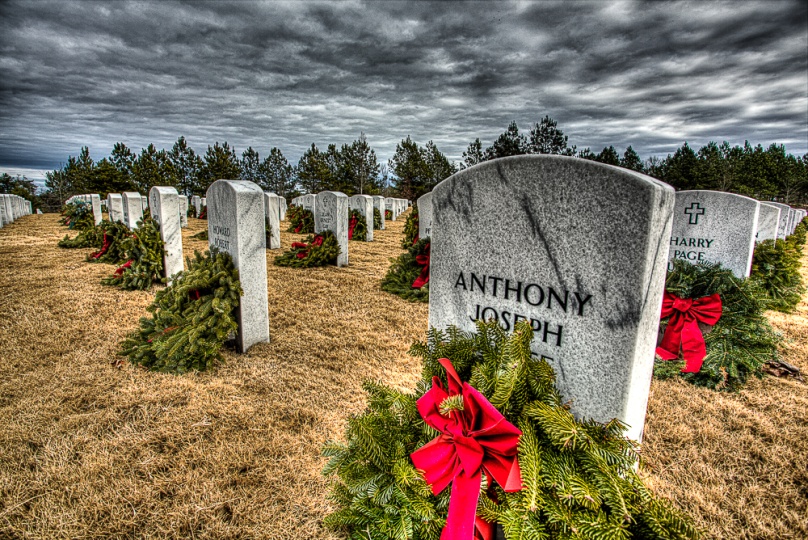
Figure 8 Shot at 17mm. Notice how the distance between headstones seems large, and how size diminishes in the distant headstones.
Wide Angle Lenses have focal lengths between 24mm and 40mm. They also increase the distance and size of near and far objects, but not as strongly as the ultrawides. They and the ultrawides are often used in landscape and architectural photography.
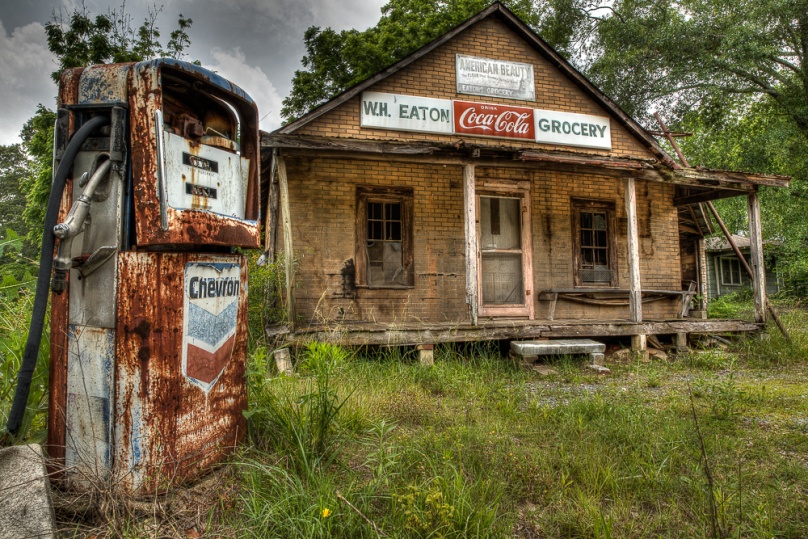
Figure 9 Shot at 24mm. By shooting from close to the gas pump, it seems large in comparison to the old store.
Figure 10 Shot at 30mm. Shooting from close to the lion emphasizes the lion more than the bridge or sunrise.
Normal lenses have a focal length of between 40mm and 60mm. These lenses have roughly the same angle of view as our eyes and so they don’t strongly exaggerate distance or size relationships. Because they don’t create an unique viewpoint, they may produce less dramatic photos, unless the photographer uses composition and color to create the drama.
Figure 11 Shot at 50mm, this appears pretty much as the eye sees it.
Figure 12 50mm works well when we don’t need to create a dramatic perspective. In this shot, I didn’t want the truck too large or small in relation to the window.
Telephoto Lenses have a focal length between 70mm and 300mm. They compress distance and minimize size differences in near and distant objects. Their magnification brings distant objects closer and are often used when you can’t move closer to your subject. They are widely used in sports and wildlife photography.
Figure 13 At 300mm distance is compressed and all of the headstones appear close to the same size.
Figure 14 A budding sunflower in front of a full blossom at 100mm.
Figure 15 A budding sunflower in front of a full blossom at 500mm. Notice how close they appear and how much larger the back flower is at 500mm.
Super Telephoto Lenses have focal lengths greater than 300mm. Common focal lengths are 400mm, 600mm and 800mm. As the focal length goes up, so does the size, weight and cost. Super telephotos by the major manufacturers can easily cost over $10,000. They greatly magnify everything, including camera movement, so good technique, sturdy support, and fast shutter speeds are needed. These are used for birds in flight, major sporting events and situations where it is dangerous or impossible to move closer to your subject. They also tend to have a shallow depth of field that can useful for isolating subjects.
Figure 16 At 500mm the compression of a super telephoto makes the planes seem even closer to each other than they are.
Figure 17 500mm brings this osprey much closer than either of you would like to be in real life.
Macro Lenses are designed to create a life-sized or greater image of the subject on the sensor. they usually have a focal length of 50mm to 100mm. These are used for flower photography, insects, medical and scientific. They can also be used for general photography.
Figure 18 A 100mm macro captures sharp detail in the bug and even the hairs on the plant leaf.
Figure 19 A 100mm macro lens provides a close up view of a fly on a daylily.
Teleconverters are designed to attach between the back of the lens and the camera body. Typical converters are 1.4X and 2x. They increase magnification by their factor, so a 100mm lens becomes a 140mm lens with a 1.4X converter, and becomes a 200mm lens with a 2X converter. There may some loss of image quality, but more important is the loss of light. A 1.4X converter causes a 1 stop drop in light, and a 2X converter causes a 2 stop drop. They also decrease the effective aperture, and may make auto focusing impossible.
Figure 20 The effect of adding a 1.4X converter.
Your Practice Assignments
1) Set two identical objects on a table about 2 feet apart, one in front of the other, and just offset enough to see both. Place your camera about 2 ft away, focus on the front object, and shoot images at 28mm, 50mm, and 70mm. (Remember I’m using full frame equivalents, so on a Canon crop body that would be roughly 18mm, 30mm, 44mm.) Keep the distance constant, so a tripod may be useful. Look at the shots and notice that while the size of the objects changes, their relationship to each other doesn’t change. It may be easier to see if you use Lightroom or Photoshop to crop the images so the front object fills the frame in each image. Focal length doesn’t change perspective if the camera to subject distance is constant.
2) Leave the two objects set up as above. Set your lens to 28mm (or equivalent) and move your camera until the front subject fills the frame. Repeat at 50mm and again at 70mm. Notice how the relationship of the objects change. Camera to subject distance does affect perspective.
3) Do an internet search for “wide angle landscape” images. Notice how many of the most powerful images use a close object to create a sense of depth in the photo.
4) Do an internet search for “telephoto photography” images. Notice how the longer lenses compress distance and isolate individual subjects.
4) Do an internet search for images of any subject of your choice. Try to figure out if the photographer used a wide, normal or telephoto lens, and how it affects the look and mood of the picture.