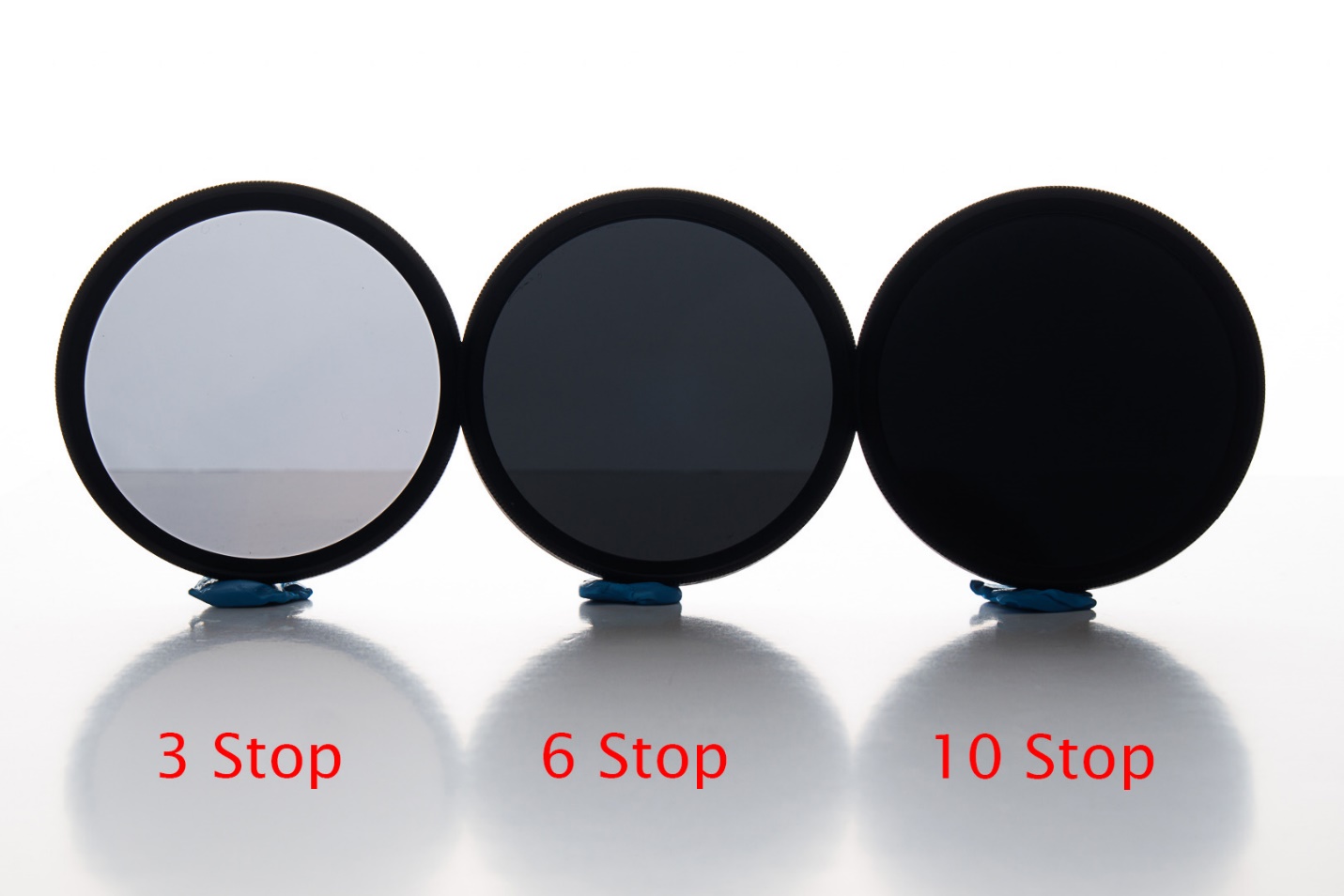
Neutral density filters are filters that decrease the amount of light entering the lens. They have two main uses either to allow shooting at a slower shutter speed, or shooting at a wider aperture. The much more common use is slow down the shutter speed to allow moving subjects to blur, or with extremely long shutter speeds allow moving subjects like tourists to completely disappear. Shooting at wider apertures is usually done by selecting faster shutter speeds, and unless you have rare situation where you need both a wide aperture, and a slow shutter speed, the faster shutter speed is no problem.
ND filters are available as square filters, or threaded round filters. If you use the threaded filters, you can get a set for your largest diameter lens and get step up rings for your smaller lenses, or if money is no object get a set for each lens size you plan to use.
What do all of those numbers mean? There are several different ways of naming ND filters and how much they reduce light. The simplest way would be to state how much they reduce light, such as 1 stop, two stops, 6 stops etcetera. But that would be too easy. The most common naming either uses optical density, or the filter factor.
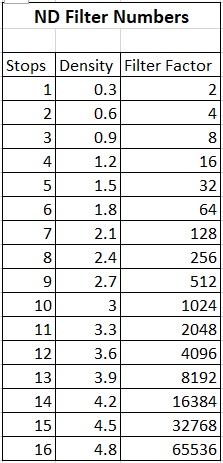
In the optical density format, 0.3 equals one stop, 0.6 equals 2 stops etc. Most days I can do the math in my head.
The filter factor system is based on the log of two and how many stops it reduces. So for example a one stop reduces light by ½ or 2^1. Two stops would be 2^2 or 4, three stops would be 2^3 or 8. I don’t mean for this to become a math class, and you can just refer to the chart below. The advantage of this system is you can multiply your shutter speed without a filter by the filter factor to get your new shutter speed with an ND filter.
You can also stack filters and the effect is additive, so a 6 stop plus 10 stop equals a 16 stop filter. Also if you get caught out without your ND filter a polarizing filter is about a 1.5 stop ND.
OK, those are the advantages; you know there must be some disadvantages too. Ideally ND filters decrease light without causing a color shift, but in practice there is a color shift until you get into the more expensive filter lines. You can color correct in camera raw by finding a neutral tone to color balance on, or shoot a gray card in your first shot and use it to color balance all of your images.
Focus can be a challenge because of the dim viewfinder. My DSLR focuses well with a three stop, but autofocus struggles with 6 stops and above. My M50 mirrorless works well with 3 or 6 stops. I haven’t used my 10 stop yet, but supposedly most mirrorless cameras can handle it. If focusing becomes an issue, focus before placing the filter, and switch to manual focus. Be careful not to change focus as you place the filter.
Most cameras will only do timed shutter speeds up to 30 seconds. Beyond that you’ll need to switch to bulb mode and use a timer. I have two free ND filter apps on my phone that will calculate shutter speeds with various ND filters and also have built in timers. I use an Android phone, but they (or similar) apps should be available for I Phones. Look for “ND Filter timer” or “ND Expert”.
Here are some examples I shot the other day at Goforth creek. They aren’t best example since it was fairly overcast and the cascade is in shade, so my shutter speeds were already pretty slow. Most American photographers like the smooth silky water produced by a slow shutter speed. How slow that shutter speed needs to be depends on the amount and speed of the water. Experiment with different filters until you find the look you prefer.
I shot the first photo wide open at 1/40 and ISO 800 to show water that is too sharp.
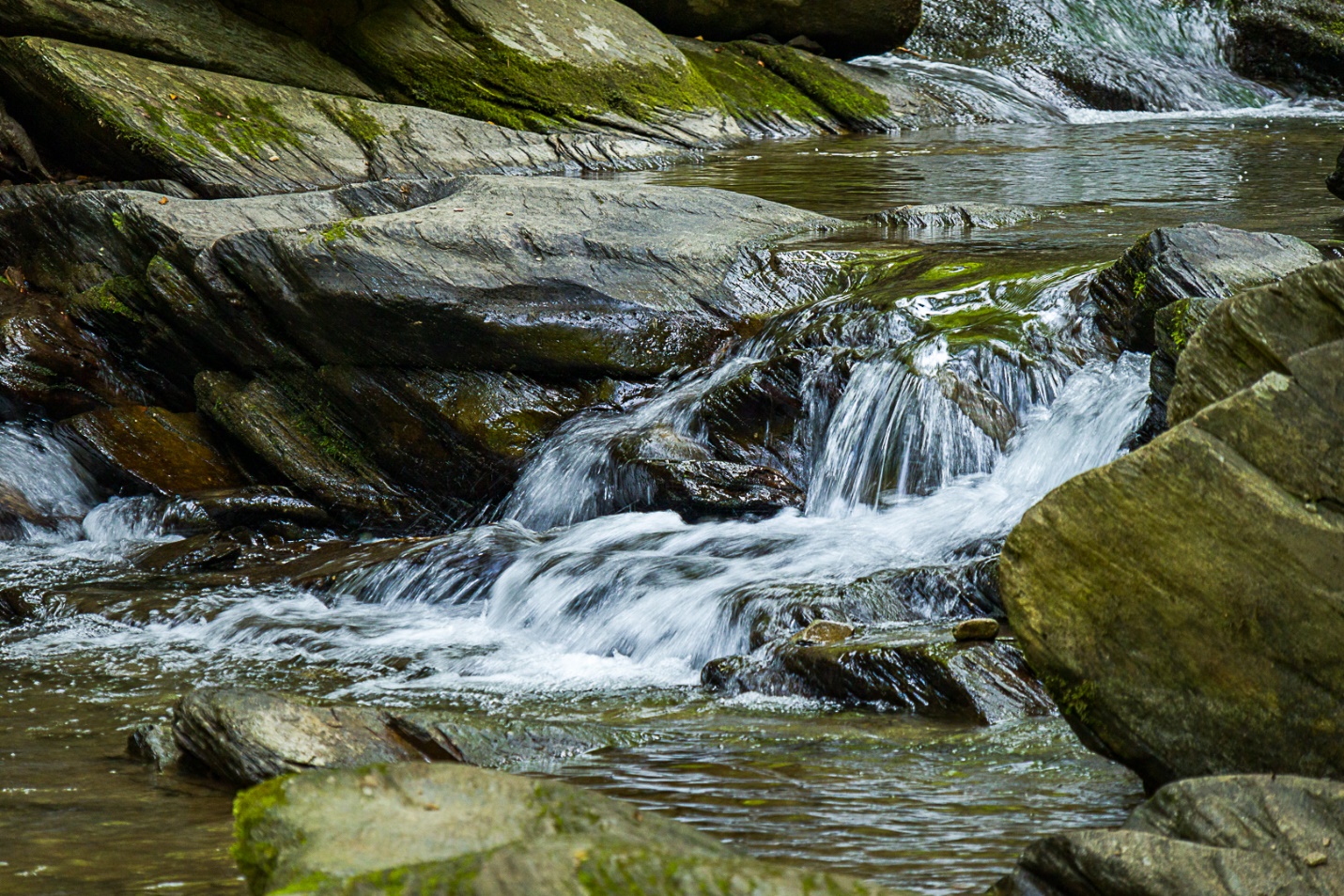
The next shots were 0.8 sec at f/16 and no ND filter, 6.0 Sec f/16 with a 3 stop ND, and 30 sec f/14 with a 6 stop ND. In these shots, there’s very little change between the 3 and 6 stop ND filters.
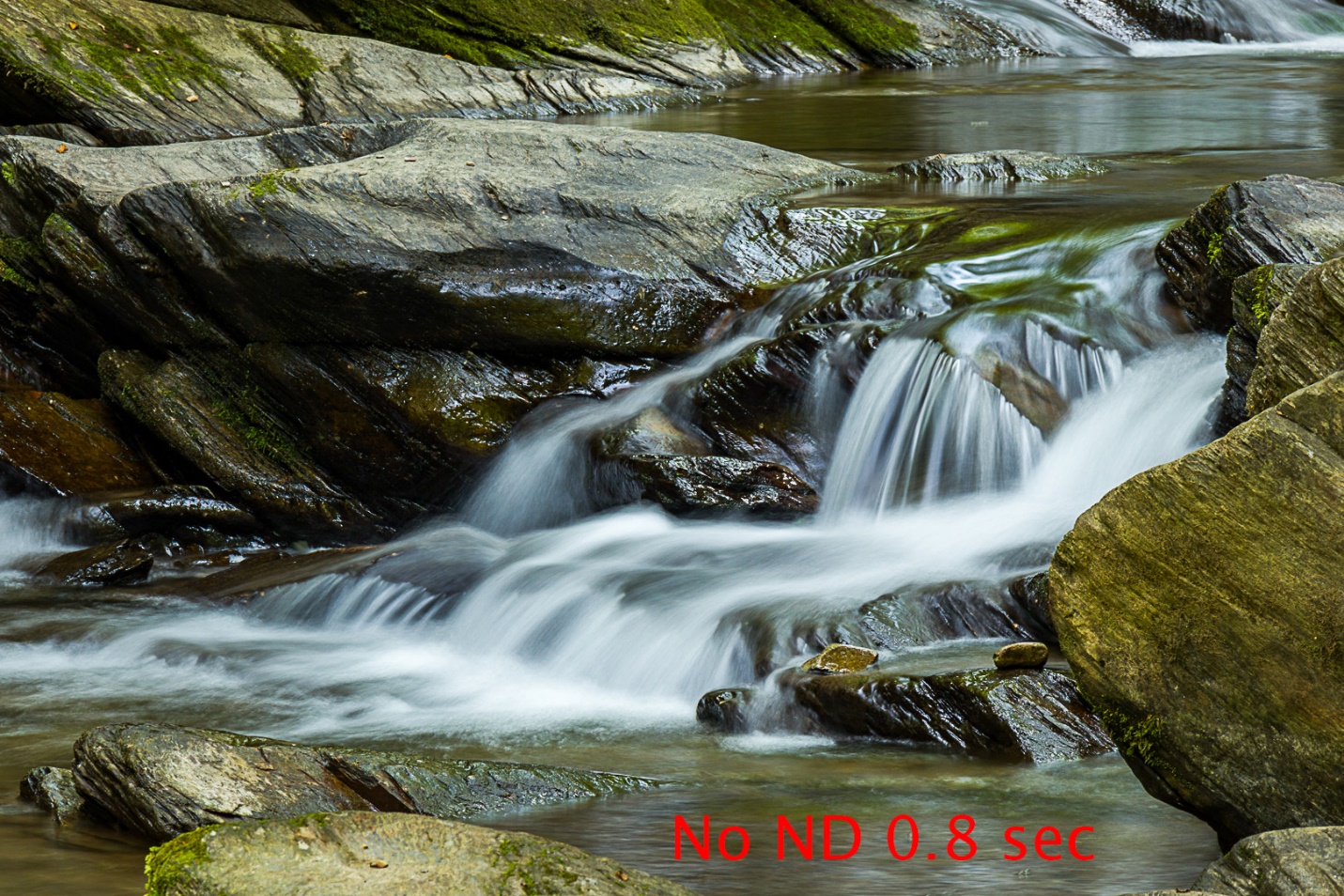
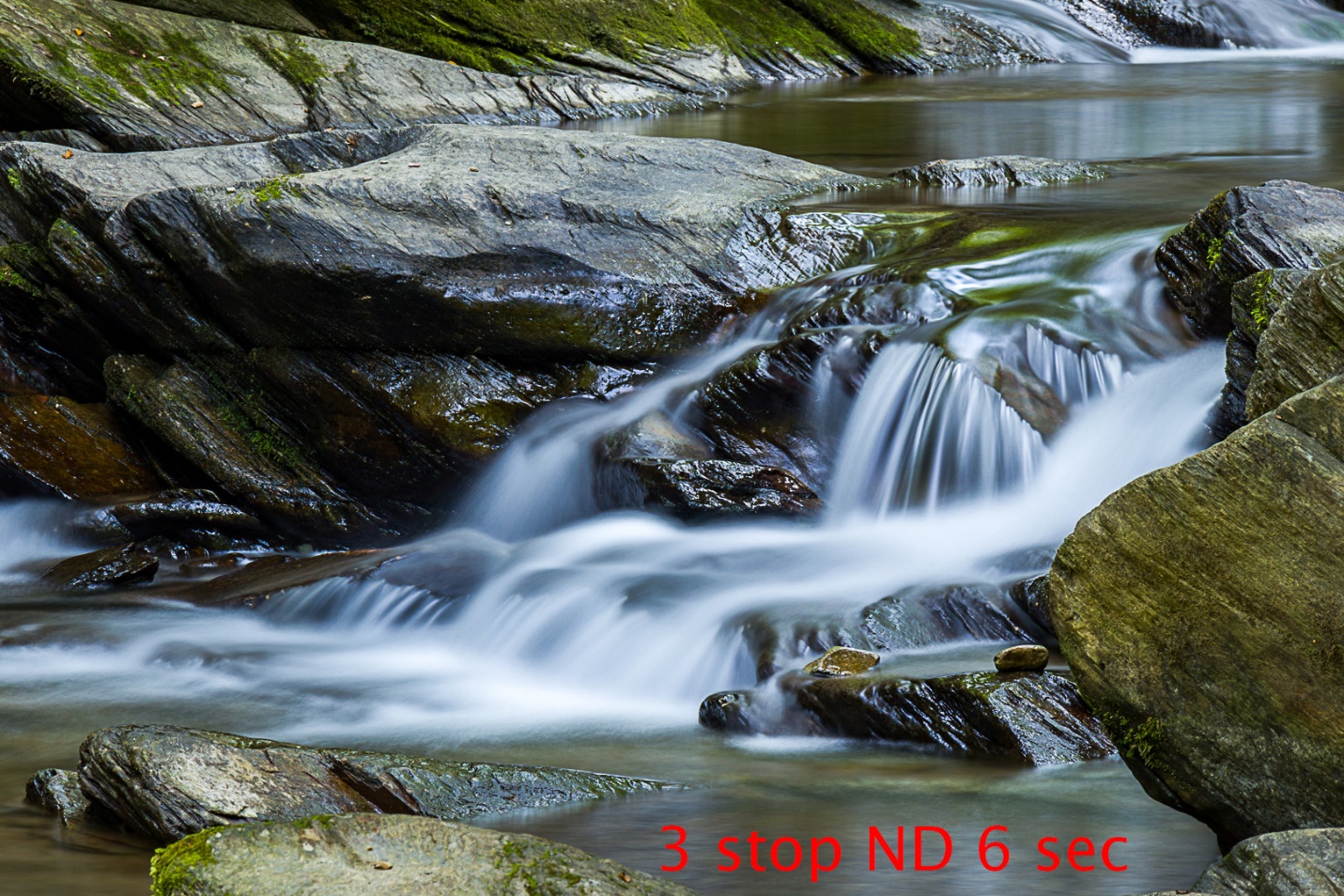
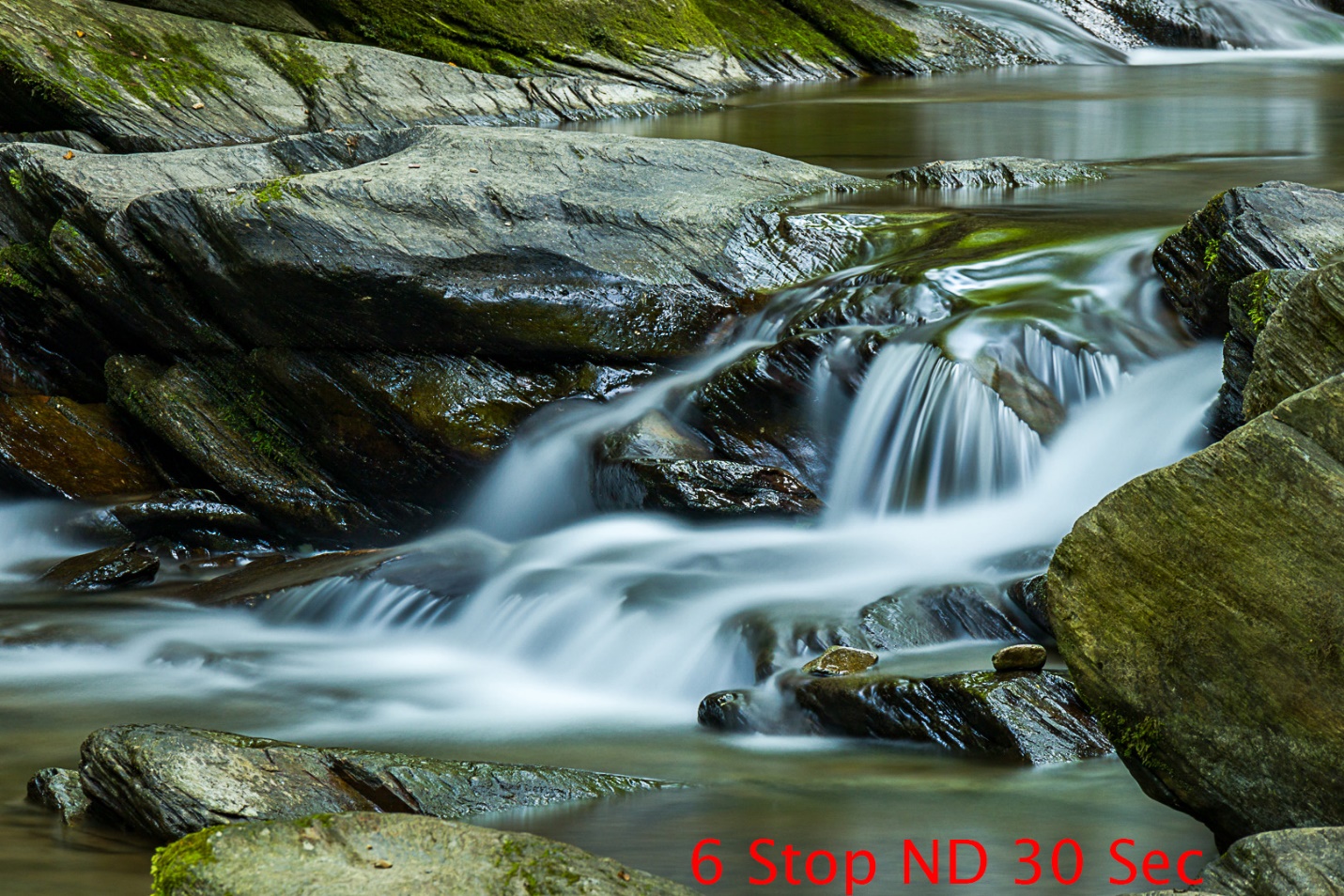
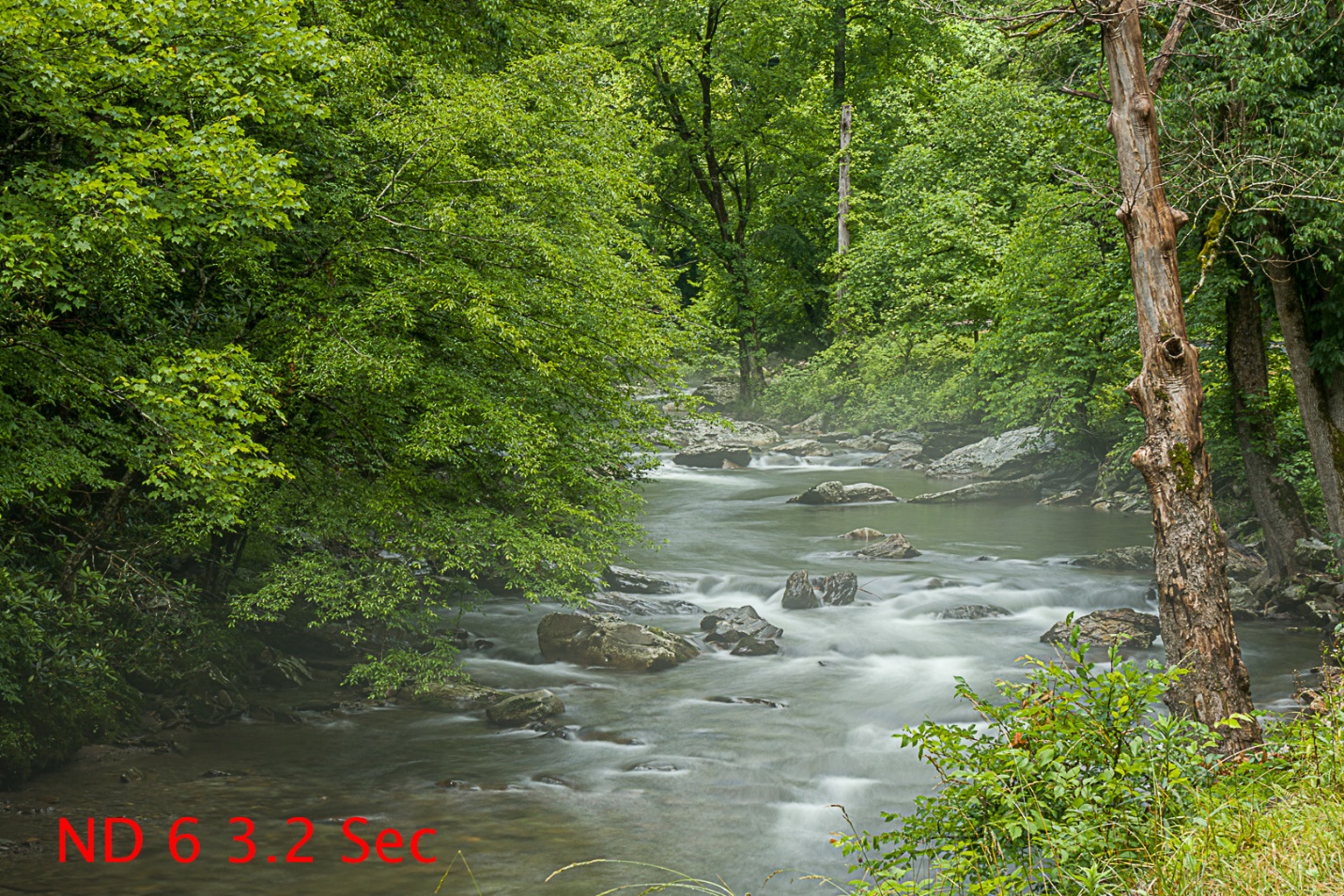
These last shots were in much brighter light, so the difference should be more obvious. The first shot was at 1/60 sec with no ND Filter, and 3.2 sec with a 6 Stop ND filter.
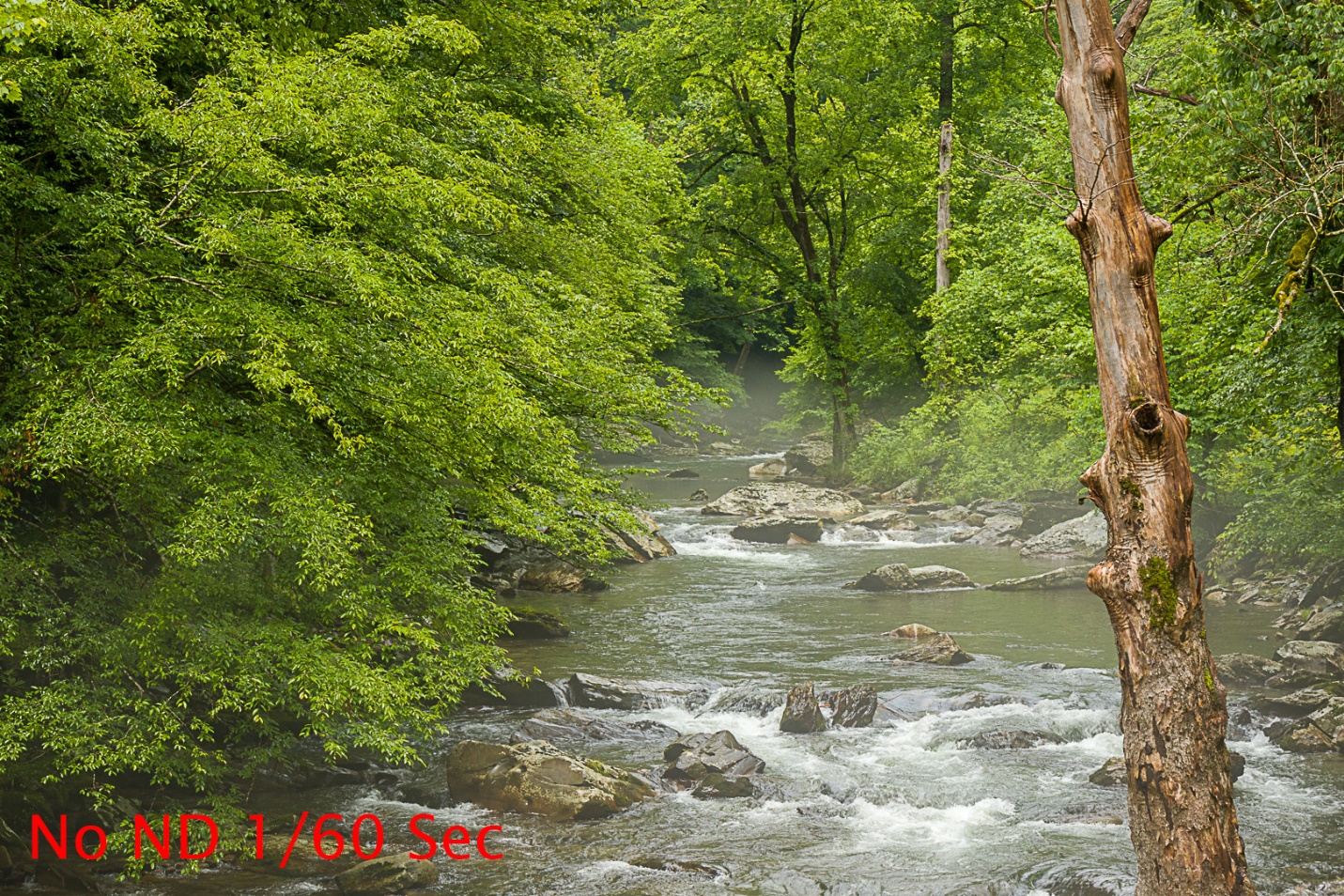
So, whenever your photography includes flowing water, or other subjects you want to blur, remember what ND filters can do, and don’t leave home without them.